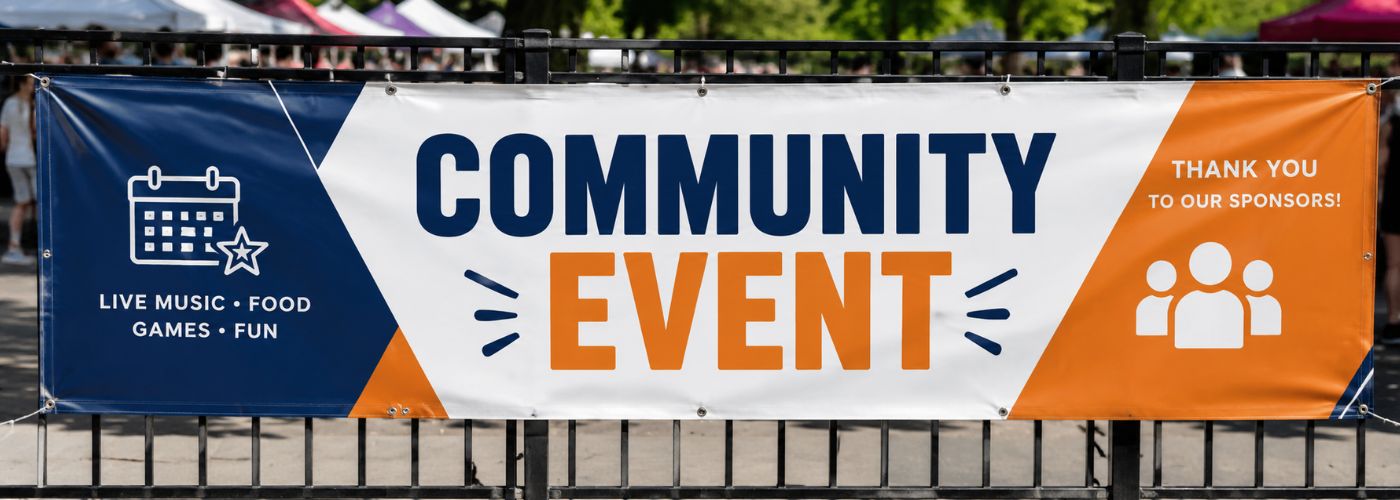
Choosing the right banner can make a major difference in how a business, organization, or event is presented. The location, weather, display setup, and overall purpose can all affect which material works best.
This article covers the most common banner options and explains where each one can provide the most value.
Top Banner Materials For Events
There is no single banner material that works perfectly for every situation. Some events need a durable outdoor banner that can handle sun and changing weather, while others need a polished indoor display that looks clean under bright lighting.
When comparing banner materials for events, it is important to think about where the banner will be placed, how long it will be used, and how close people will be when viewing it.
Vinyl, fabric, mesh, pop-up displays, and step-and-repeat displays each serve a different purpose. A banner hanging on an outdoor fence has very different requirements from a display positioned behind a registration table at a conference.
Choosing a material based on the actual event environment can improve visibility, presentation, durability, and overall value. It can also help prevent common problems such as excessive movement, difficult setup, glare, or a display that does not match the style of the event.
Vinyl Banners for High Traffic Events
Vinyl is one of the most widely used banner materials for events because it offers a useful combination of durability and versatility. It works well at festivals, trade shows, community gatherings, sporting events, grand openings, and other locations where a large number of people may pass the display.
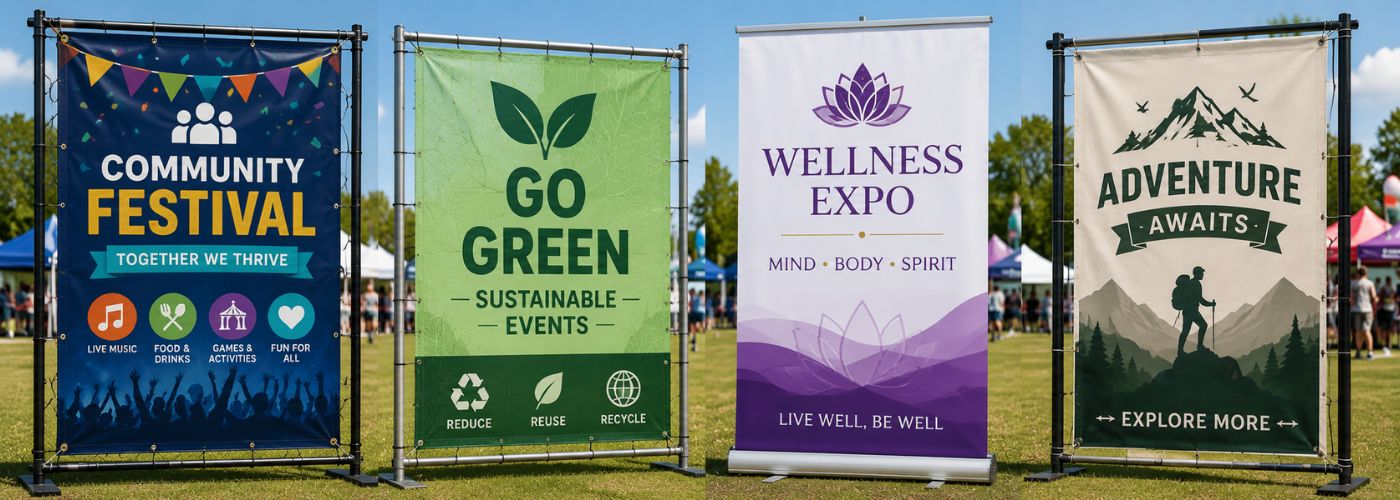
Vinyl banners can be produced in many sizes, making them useful for everything from booth signage to large promotional displays.
Another advantage is that vinyl can work in both indoor and outdoor settings. It is generally easy to clean and can stand up to regular handling better than more delicate display options. Grommets can also be added to make hanging the banner from walls, fences, frames, or temporary structures easier.
For busy event spaces where a banner may be handled, moved, packed, and displayed multiple times, vinyl provides a practical balance between strength and presentation.
Placement still matters when using vinyl. A large solid banner can catch wind when installed outdoors, so it should be properly secured and placed in a suitable location.
Indoors, organizers should consider lighting and viewing distance when selecting the finish and size. Thinking about these details before printing helps ensure the finished banner is easy to see without becoming distracting or difficult to install.
Fabric Banners for Professional Indoor Displays
Fabric is often chosen when appearance is a major priority. Among the different banner materials for events, fabric can create a softer and more refined look that fits well in conference centers, hotels, exhibition halls, retail spaces, corporate meetings, and formal event venues.
It can be especially effective when a display will be positioned near guests, since the material has a different visual texture than traditional vinyl.
Fabric banners are a strong option when the goal is to create an indoor display that feels like a natural part of the event rather than temporary advertising. They can work behind reception areas, above booths, along interior walls, or as part of a larger branded display.
Fabric can also reduce some of the harsh reflections that may appear on certain materials under strong indoor lighting, which can help graphics remain easier to view from different angles. Understanding how much detail custom printing can achieve can also help when preparing logos, images, and other visual elements for a professional display.
Care and storage are important considerations with fabric. Depending on the material and printing method, improper folding or packing may create wrinkles that affect the appearance of the display.
Event teams should follow the recommended storage method and allow enough time to prepare the banner before guests arrive. When handled correctly, fabric offers a professional appearance that works particularly well for events focused on presentation and atmosphere.
Mesh Banners for Windy Outdoor Locations
Outdoor events introduce challenges that may not exist inside a controlled venue. Wind is one of the biggest concerns, especially when banners are attached to fences, barricades, scaffolding, or other exposed structures.
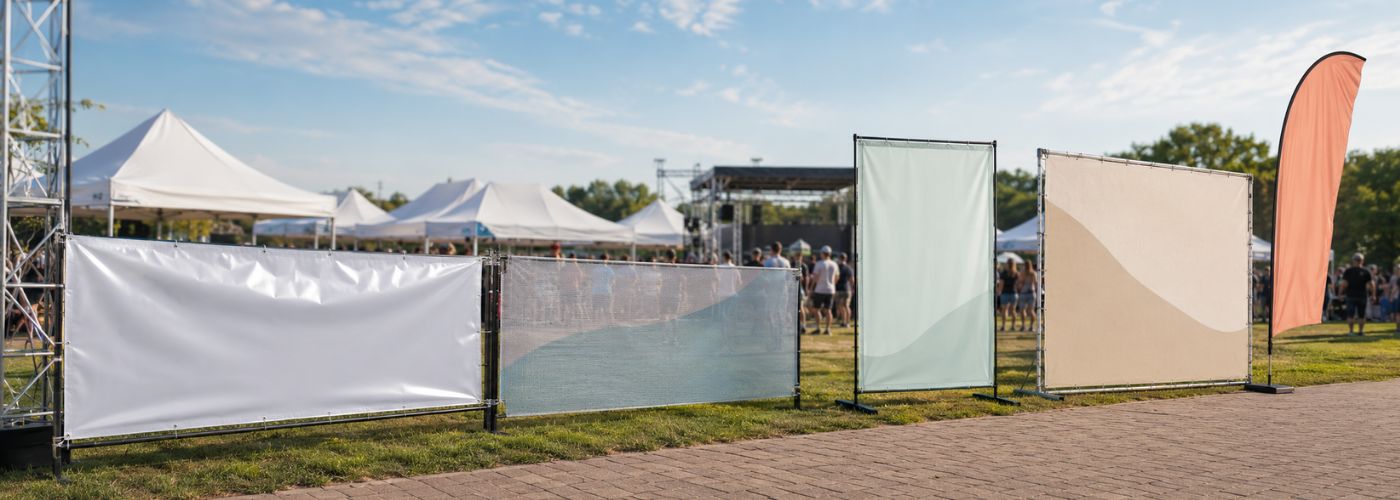
Mesh is one of the most useful banner materials for events held in these conditions because the material contains small openings that allow some air to pass through instead of pushing directly against a solid surface.
This design can make mesh useful for outdoor festivals, construction-related events, sporting venues, races, parking areas, and large community gatherings.
The small openings may slightly change the appearance compared with a solid banner, but the graphics can still remain clear when the design is created with the material in mind. Large text, bold shapes, simple layouts, and strong visual contrast are often effective for displays that people will view from farther away.
Mesh does not eliminate the need for proper installation. The banner still needs suitable attachment points and secure hardware based on its size and location.
Allowing air to move through the material can reduce some of the pressure created by windy conditions and make mesh a more practical choice for exposed outdoor spaces.
Event planners should still check the weather and installation area to determine whether conditions are appropriate for any temporary signage.
Pop-Up Banners with Stands for Event Marketing
Pop-up displays are useful when an event team needs signage that can be placed without attaching it to a wall, fence, or permanent structure.
These systems combine printed graphics with a supporting stand, making them convenient banner materials for events such as trade shows, networking meetings, conferences, recruiting events, presentations, and promotional activations. They can be positioned near entrances, booths, product displays, or check-in areas.
A major advantage of a stand-based banner is the ability to create a defined marketing space without making permanent changes to the venue.
This can be helpful in rented event spaces where attaching signage to walls may not be allowed. It also gives event teams more flexibility to adjust the layout if foot traffic changes or a display needs to be moved to another area during the event.
Pop-up banners work best when the message is designed for quick viewing. Guests may only have a few seconds to notice the display while walking through a busy space, so overcrowding it with information can reduce its impact.
A clear headline, recognizable branding, and a focused message are usually easier to understand from a distance. Organizers should also consider the footprint of the stand so it does not interfere with walkways or create unnecessary obstacles.
Step & Repeat Displays for Branded Events
Step-and-repeat displays are designed to create a consistent branded background. They are commonly seen at award ceremonies, corporate gatherings, product launches, fundraisers, media events, grand openings, and photo areas.
Compared with other banner materials for events, these displays are often selected specifically because they will appear behind people in photographs, interviews, or videos.
The repeating design usually features logos, event names, sponsor marks, or a combination of branded graphics arranged across the background. Spacing is important because the graphics need to remain visible when one person or a group stands in front of the display.
A carefully designed step-and-repeat can extend event branding beyond the venue by creating a recognizable background for photos that may later be shared online, in marketing materials, or with the media.
The physical material should also match the setting. Fabric can provide a smooth, professional appearance for indoor photo areas, while other durable materials may be appropriate when the display needs to travel frequently or be used in different environments.
Lighting should be tested before the event begins because strong reflections or shadows can affect photos. Giving the display enough space also allows photographers and guests to stand at a comfortable distance while keeping the branded background clearly visible.